Why people still use Atari 8-bit computers
The first Atari computers were released in 1979. The line-up consisted of two models: the 800 and the 400. They were basically the same computer internally, but the latter had a membrane keyboard and other differences to make it way cheaper than the 800.
They were pretty advanced for the time they were released, with great sound and graphics capabilities. Compared with the kings of the time, the TRS-80, Commodore PET and Apple II, the Atari had everything to be a successful machine.
History tells us that Atari 8-bit computers were indeed a success, to a certain extent. Atari sold 1/4 of the units that the juggernaut Commodore 64 (released in 1982), but still, 4M units is not too shabby at a time when computers were still starting to reach the businesses and residences across the world.
Throughout its life, the Atari 8-bit had multiple updates, but always keeping the core foundation since the first model. After the 400 and 800, we saw coming out to life the 1200XL, the 800XL and 600XL, and lastly, the 65XE and 130XE. You can learn all about that in details by reading the Wikipedia article here.
The 8-bit family survived until 1992, well in the 16-bit era and mostly, when PCs were becoming almost the only option of a personal computer one could buy.
The major market for the Atari was US, Canada, and Europe. In South America, it was also a popular choice in Chile. In the 90’s, Poland (still Europe, I know) was also a strong market for the almost obsolete 8-bit computers, but because it was a viable and economic option, it was a great success there, too.
The current scene
Jumping to 2025, where we have in our pockets computing power thousands of times more powerful than the first Atari 400/800, why would a group of people still be so interested in a 45-year-old machine?
As it is common to have passionate people about vintage stuff, there are many that really enjoy using and working on vintage computers, Atari 8-bit being one of them.
Community and Modern Enhancements
The Atari 8-bit scene is vibrant community keeping these machines relevant, maybe not for commercial use, but at the same they have fun, they preserve the computer history, and expand it into the future.
AtariAge is the main hub for enthusiasts worldwide. The forum is active daily with discussions about hardware mods, newly developed software, and general Atari stuff. Yeah, new software in 2025 for a computer from 1979. The community produces homebrew games, demos, and utilities that push the original hardware beyond what the designers probably thought possible.
AtariProjects.org takes a different approach by creating structured “projects” that help people get more involved in the hobby. It’s useful if you’re looking for something specific to work on or learn.
Atariteca is an excellent site to keep updated with the latest news about Atari. Although in Spanish, all modern browsers can translate it to your language pretty well!
Even user groups, something that existed back in the 80’s are still present today, with A.B.B.U.C, from Germany, being the largest and most active, to my knowledge.
I couldn’t left out Antic — The Atari 8-bit podcast, a montlhy podcast that is being produced for 13 years already and a mandatory listen for those who claim being Atari fans.
Modern hardware support
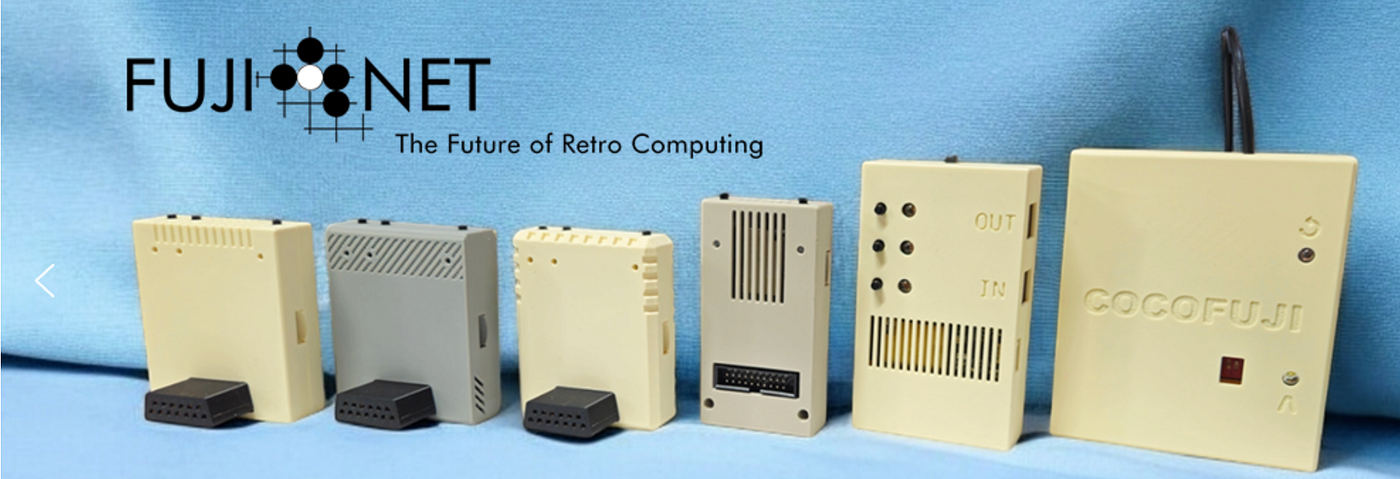
The most exciting development for Atari 8-bit users has to be the FujiNet. This device connects to the SIO port and gives these old machines network capabilities. We’re talking internet access and even online multiplayer games.
Display connectivity has improved significantly as well. Devices like RetroTINK and specialized HDMI adapters let you connect to modern monitors without hunting down CRT televisions or dealing with RF modulators.
With these communities, resources, and modern hardware, using an Atari 8-bit in 2025 is something very enjoyable and easy to connect with the modern world.
Atariage is, again, your best source to ask about and find the hardware that best meet your needs.
Emulation as an entry point
Although it is not hard to buy a real machine, anyone can start with emulators. I’ve been working on my own — Fujisan that runs on macOS, Linux and Windows.
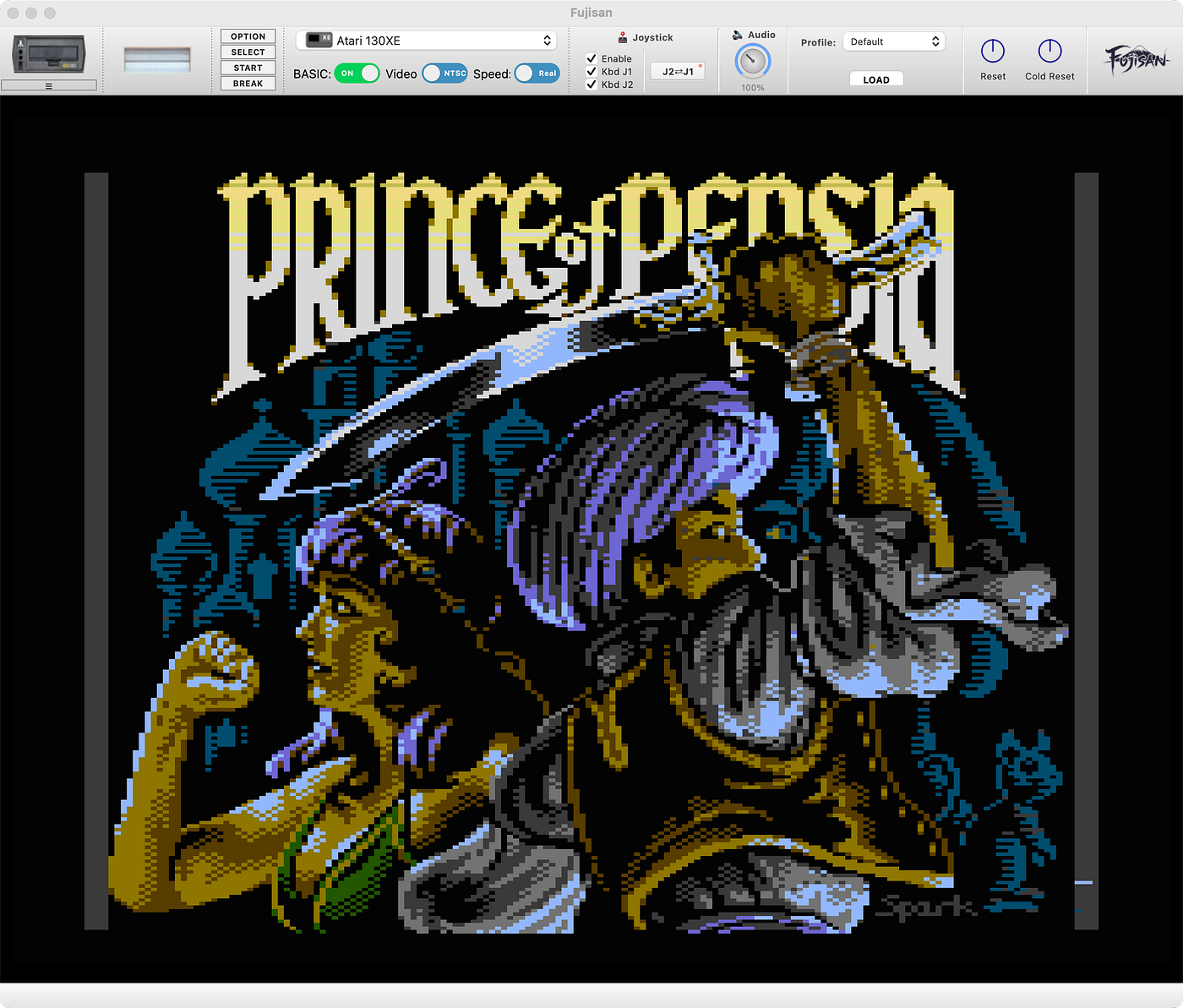
There are more field-tested options as well, like Altirra for Windows, Atari800 (multi-platform) and Atari800MacX for macOS.
Why this matters for developers
There’s another angle worth mentioning: programming on these machines is different from modern systems.
The Atari 8-bit computers have just a thin layer of abstraction between the programming language and the hardware. When you write BASIC or assembly code, you’re pretty much directly talking to the chips. Want to change screen colors? Poke a specific memory address. Need to read joystick input? Check another memory location. This direct hardware access makes it easy to understand what’s happening inside the computer.
Compare that to modern programming where you’re dealing with multiple layers of operating systems, frameworks, and abstractions. Those layers are necessary for the complexity we handle today, but for learning fundamental concepts, having that direct connection to the hardware is valuable.
The constraints force you to think differently too. With 64KB of RAM (or less, depending on the model), you can’t just throw memory at a problem. Every byte counts. This teaches efficient programming in a way that’s hard to appreciate when you have gigabytes at your disposal.
For someone learning programming concepts like memory management, graphics rendering, or how computers work at a low level, the Atari 8-bit is a hands-on playground where cause and effect are immediate. You’re not fighting configuration files or package managers. You write code that directly makes things happen on screen.
If you are interested in learning more about the Atari software development, Atariage has specific forums about the subject, with very helpful and nice people to get you started.